Luxury Mauritius honeymoon packages, as usually sold, are room categories with champagne attached; Maison Atoll composes the opposite — a private-villa honeymoon in which the house, chef, yacht and every day's rhythm are designed for one couple, inside a single all-inclusive envelope starting at USD 50,000. There is no brochure and no upgrade ladder. You confide your dates and one line of your story; within 48 hours the Maison returns a sketch of the honeymoon — which coast for your season, which house whose garden meets the lagoon, where the sandbank dinner falls in the fortnight. One dedicated liaison then orchestrates all of it, with no surprise fees and absolute discretion; the Maison accepts twelve stays per season, by invitation. What remains for the couple is the honeymoon itself: waking with the lagoon at the end of the lawn and nothing, ever, left to arrange.
Why a private villa outclasses the honeymoon suite
The best honeymoon hotels in Mauritius are genuinely good — and structurally public. Breakfast is a room shared with strangers; the beach is allocated in loungers; the private dinner happens forty metres from another couple's private dinner. A villa removes the audience. The pool is yours at midnight, breakfast happens on your hour, and the only faces of the stay belong to a team briefed to serve two people and then disappear. Couples who have done both rarely argue the comparison twice.
Privacy also changes behaviour, which is the real point of a honeymoon. There is no dressing for the buffet, no negotiating a cabana, no lowering of voices at the table. The days lose their public scaffolding and take the couple's shape instead: swim, sleep, table, sea, repeat, in whatever order the morning suggests. What the suite sells as intimacy — a plunge pool behind a hedge — the villa simply is, with a garden and a beach frontage where no one else will ever appear.
The objection is always effort: a hotel runs itself, surely a villa does not. This is precisely what the Maison exists to dissolve. The house comes fully staffed — chef, butler, housekeeping, manager — and every movement of the honeymoon is orchestrated before you land, inside the envelope, by one liaison. You inherit the outcome of a hotel's machinery with none of its crowd, and none of its schedule.
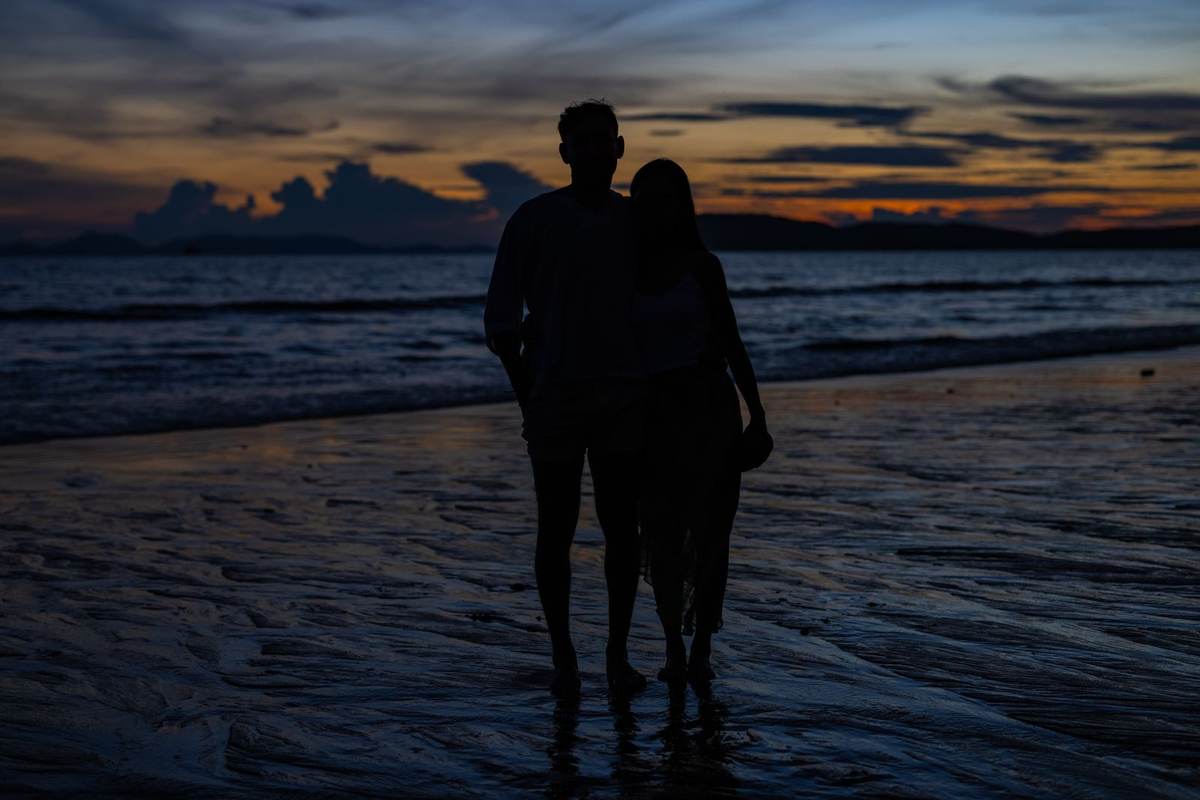
Composed for two: chef, yacht, one liaison
The chef is the honeymoon's quiet author. Menus begin with a conversation before you fly — the dishes of your first dinners together, what you refuse to eat, whether breakfast is a ceremony or a coffee — and evolve daily with the market. Dinner might be six courses by the pool on Tuesday and grilled fish eaten barefoot on Thursday; both are yours without a bill, because the chef belongs to the stay and not to a restaurant.
The sea receives the same treatment. A crewed catamaran or motor yacht is woven into the fortnight rather than booked as an outing: a dawn run to swim where Tamarin Bay's dolphins pass, an afternoon at anchor inside the lagoon, one long day rounding Le Morne with lunch aboard. The crew is briefed by the Maison, the itinerary bends to the wind and to your mood, and nobody hands you a card machine at the gangway.
Above it all sits one liaison — a single senior person who holds the whole file and answers within 48 hours at every stage, from first sketch to final transfer. Surprises are their specialty: the ring produced at the sandbank dinner, the musicians who appear for one song and vanish, the photographs taken only if and when you asked for them. The Maison never names its guests; the honeymoon's record belongs to the couple alone.
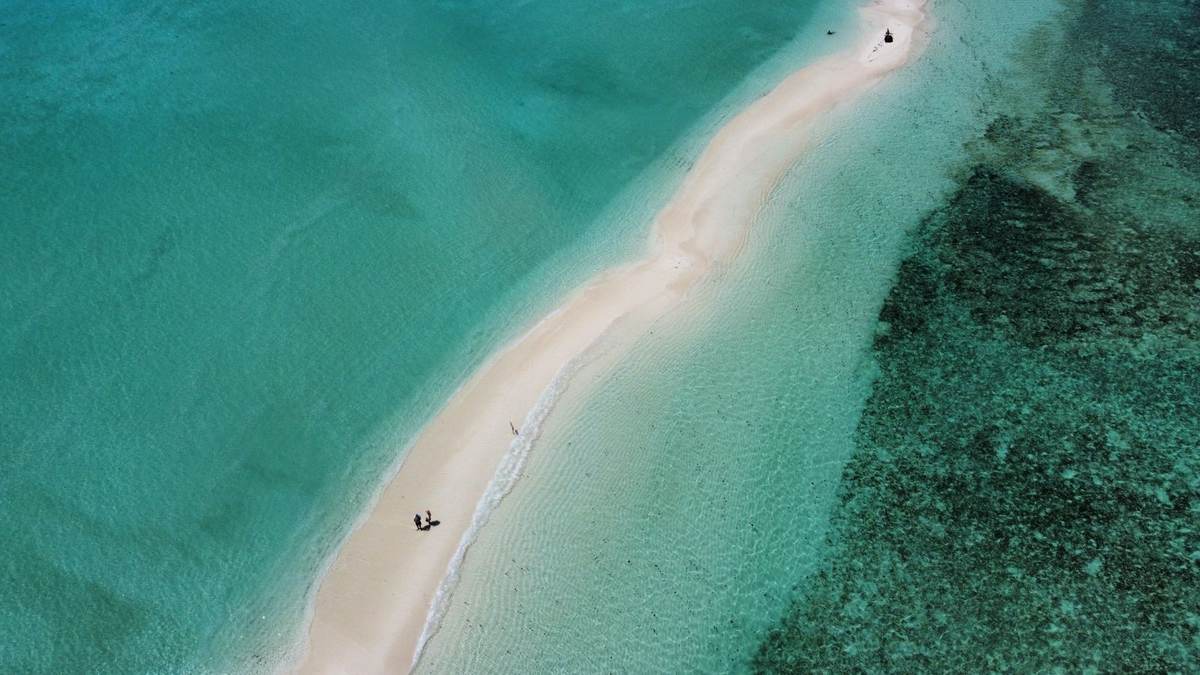
The island's hours: what two weeks can hold
A Mauritius honeymoon rewards those who use the island's clock. The sandbank near Île aux Bénitiers is at its purest just after sunrise, before the excursion boats arrive — which is the hour the Maison sets a table there. Dolphins move through Tamarin Bay early; by mid-morning you are back for breakfast on the lawn. Evenings might carry you to Chamarel for rum tasted where it is distilled, or no further than the garden, where a sega trio plays one set and withdraws.
Inland days offer the counterpoint couples remember: the coloured earths and waterfalls around Chamarel, tea at Bois Chéri drunk overlooking the south coast, the sacred lake at Grand Bassin, a walk on Le Morne Brabant — UNESCO-listed since 2008 — timed for the late light. The helicopter turns any of it into a single morning: fifteen to twenty minutes from most coasts, with the famous underwater-waterfall illusion off Le Morne seen from above along the way.
And built into the fortnight, deliberately, is nothing at all: whole days when the staff withdraw to the edges, the gates stay closed, and the lagoon at the end of the garden is the only appointment. The Maison plans emptiness with the same care it gives events — it is usually those days the couple names first, years later. A honeymoon should have room in it; the composition's job is to protect that room from the itinerary.
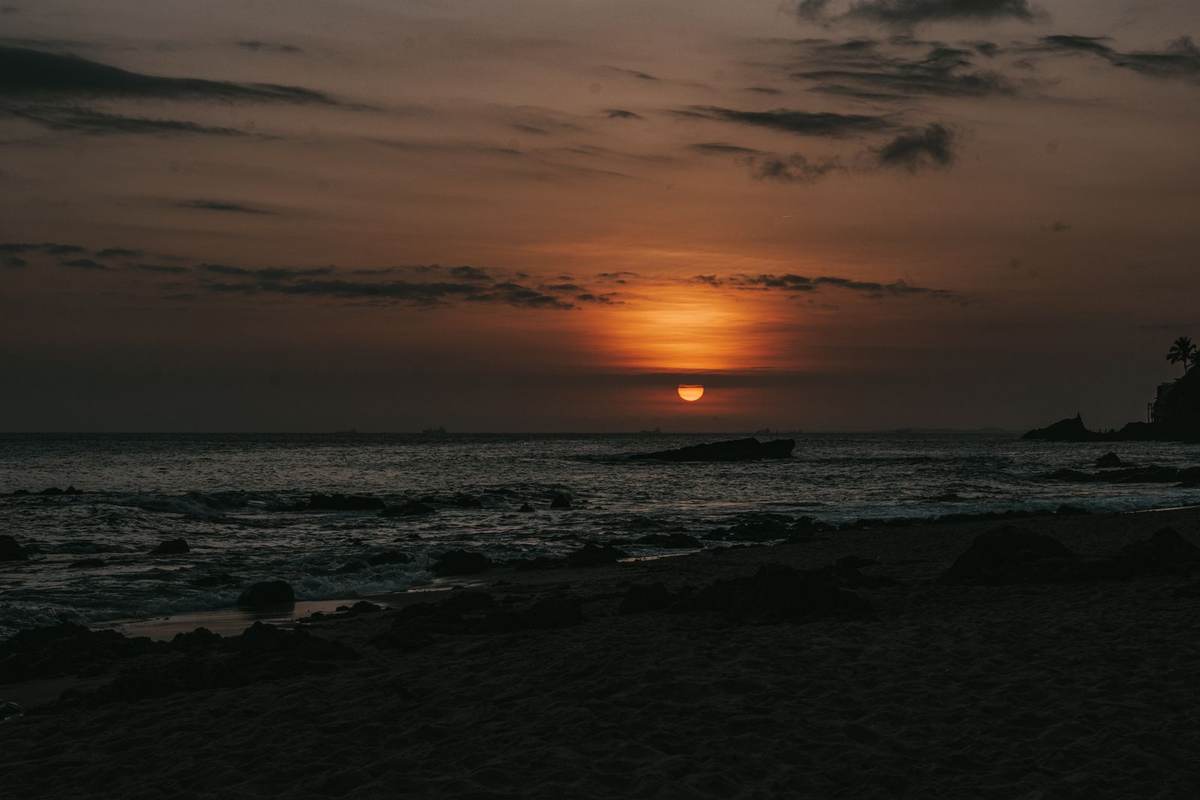
When to honeymoon in Mauritius
Both seasons flatter a honeymoon; they flatter different ones. The austral summer, November to April, is the postcard: hot, green, still lagoons around the whole island, mangoes and litchis in the markets, brief warm showers that pass before the towels dry. January to March carries an occasional cyclone watch, which the Maison tracks and plans around — villas are chosen with sheltered alternatives in mind, and the calendar bends without drama.
May to October, the austral winter, is the connoisseur's choice: dry air, softer light, nights for sleeping under a sheet rather than air-conditioning. The southeast trades comb the east coast in these months, so honeymoons are composed on the sheltered west and north — Tamarin, Rivière Noire, Trou aux Biches — where the mornings stay glassy. From roughly July to October, humpback whales pass offshore, and a dawn sortie to meet the season is easily added to the fortnight.
Flights fit either choice: around twelve hours nonstop from London, similar from Paris, roughly four from Johannesburg, one stop via the Gulf from almost anywhere else. The Maison plans arrival day honestly — helicopter from SSR airport, a first lunch already laid, and no plans whatsoever before the second morning. Jet lag from Europe is mild, since Mauritius sits only three to four hours ahead — one more quiet argument for this island over farther oceans.
Proposals, vows and the day after the wedding
Some honeymoons begin on the island itself. The Maison regularly composes proposals — the question asked at a sandbank table set for two, or from the air above the lagoon — and renewals of vows for couples marking a decade or three. The choreography follows the same discipline as the honeymoon: one liaison, absolute discretion, and a plan the other person never sees coming until the moment it is meant to be seen.
Couples marrying in Mauritius can fold wedding and honeymoon into a single composition: an intimate ceremony at the villa — civil marriage for foreign nationals is well established on the island, with the paperwork handled in advance by the Maison's local team — then the guests depart, and the house becomes a honeymoon. One brief covers both; the envelope simply widens to hold the extra days and the extra chairs.
However it begins, the honeymoon ends the same way: a last breakfast without a bill, a helicopter or car timed quietly to the flight, and a file the Maison closes and never speaks of again. Twelve stays a season, engagements from USD 50,000, an answer within 48 hours — and a first request that costs nothing but a single line of your story, sent whenever you are ready to tell it.
« A honeymoon is not a product with a couple inserted into it. It is two people's story, given an island and a staff. »— The founder, Maison Atoll
FAQ
Is Mauritius good for a honeymoon?
Exceptionally, for concrete reasons: nonstop flights of about twelve hours from London, a mild three-to-four-hour time difference from Europe, warm lagoon water year-round, and an island large enough to hold beach, mountain and forest in one stay. For couples who value privacy, its villa culture — fully staffed private houses on the lagoon — outclasses the suite-and-buffet honeymoon.
What do luxury Mauritius honeymoon packages usually miss?
Privacy and authorship. Conventional packages attach extras — champagne, a massage, a themed dinner — to a hotel room shared with hundreds of other guests. What they cannot sell is a house with no other guests, a chef cooking for two, a crewed boat on your own clock, and days shaped around your story. That gap is where Maison Atoll's compositions live.
How much does a Maison Atoll honeymoon cost?
Engagements begin at USD 50,000, expressed as one global envelope covering everything: the fully-staffed villa, the chef, boats, helicopter transfers, tables ashore and each day's arrangements. There are no supplements and no surprise fees — trade-offs are decided inside the envelope with your liaison. Twelve stays are accepted per season, by invitation.
When is the best time for a Mauritius honeymoon?
November to April is the hot, still austral summer — the classic postcard, with brief showers and an occasional cyclone watch between January and March. May to October is drier and softer; the trade winds touch the east coast, so stays are composed on the sheltered west and north, with humpback whales offshore from about July to October.
Can you organise a proposal or a vow renewal?
Yes — proposals, vow renewals and wedding-plus-honeymoon compositions are regular work. The choreography stays secret from the other half until the moment itself, photographs are taken only if requested, and the Maison never names its guests. For weddings, civil marriage for foreign nationals is well established in Mauritius, with paperwork handled in advance by the Maison's local team.